Project Overview
Prompt
Create a role-play toy for preschoolers that integrates a compound, like sensory sand or slime.Timeline
Skills Used
Completed For
Hape ToysTeam Size
6 peopleProject Information
Project Brief
Create a pretend role-play toy for preschoolers that integrates a compound, like sensory ("kinetic") sand or slime.
Suggested Areas of Exploration
Can technology be integrated into the toy without connecting to another device?
Can it be portable, offer add-on sets, or transform into something else?
Could the toy teach through role-play?
Could compounds teach STEM basics to preschoolers?
Can toy trends across age groups be integrated?
Research Takeaways
We were asked to dissect the Hape brand language, look at current compound toys, and understand their shortcomings. Then our team split to research different categories.
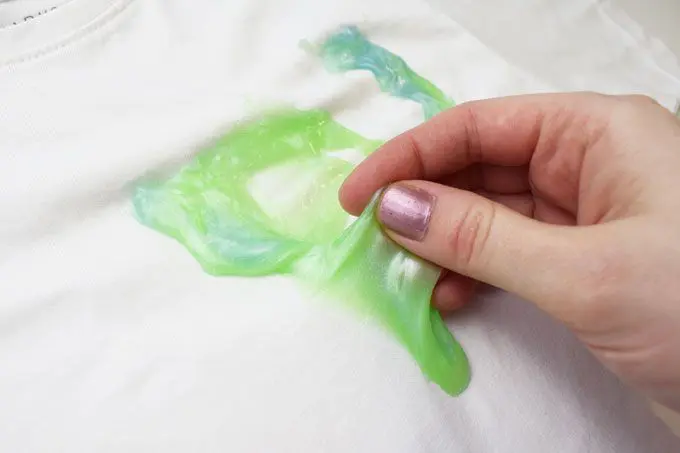
Compounds are messy and difficult to clean.
- Slime notoriously dries out and permanently stains fabric.
- Sensory sand gets separated and lost easier, but can be easily vacuumed.
- Containment is a top priority for compounds.
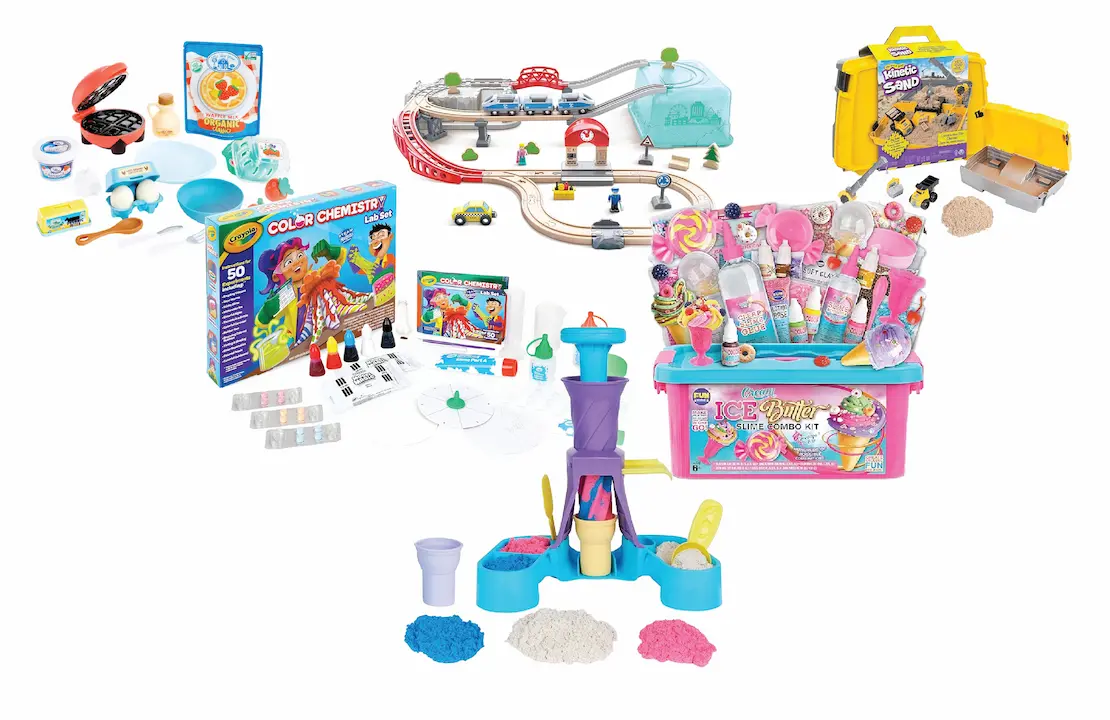
Current compound toys are often messy and short-lived.
- Many compound toys are food- and construction-based.
- Some emphasize mixing colors, but mixed compounds can't be separated which compromises the play experience.
- Single-use experiment kits are common for older children.
- Most sets fail to contain the compound effectively.

Category: STEM
- Many STEM compound toys are too complex for pre-schoolers.
- Some focus on basic spacial reasoning skills or conditional logic.
- Others are basic chemistry mixtures or building kits.

Category: Builder Role-play
- Beyond basic molding tools and bricks, compound toys don't typically encourage imaginative building.
- Other toys mimic trades jobs with simplified tools.
- These simplified tools safely build motor skills.
Initial Concept Ideation
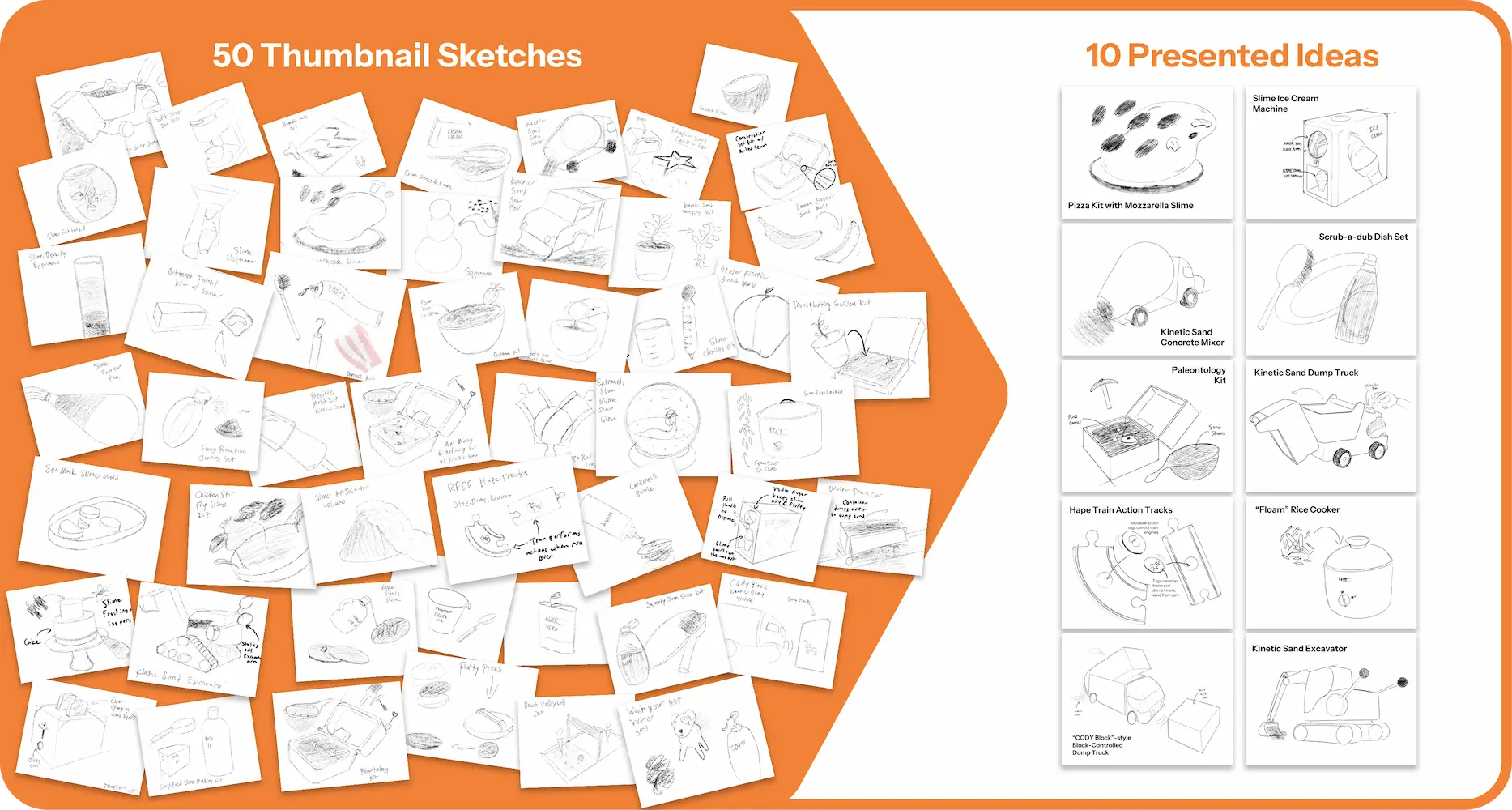
Group Ideation & Affinity Sorting
After presenting our individual ideation, we ideated together as a group and sorted our ideas into categories:
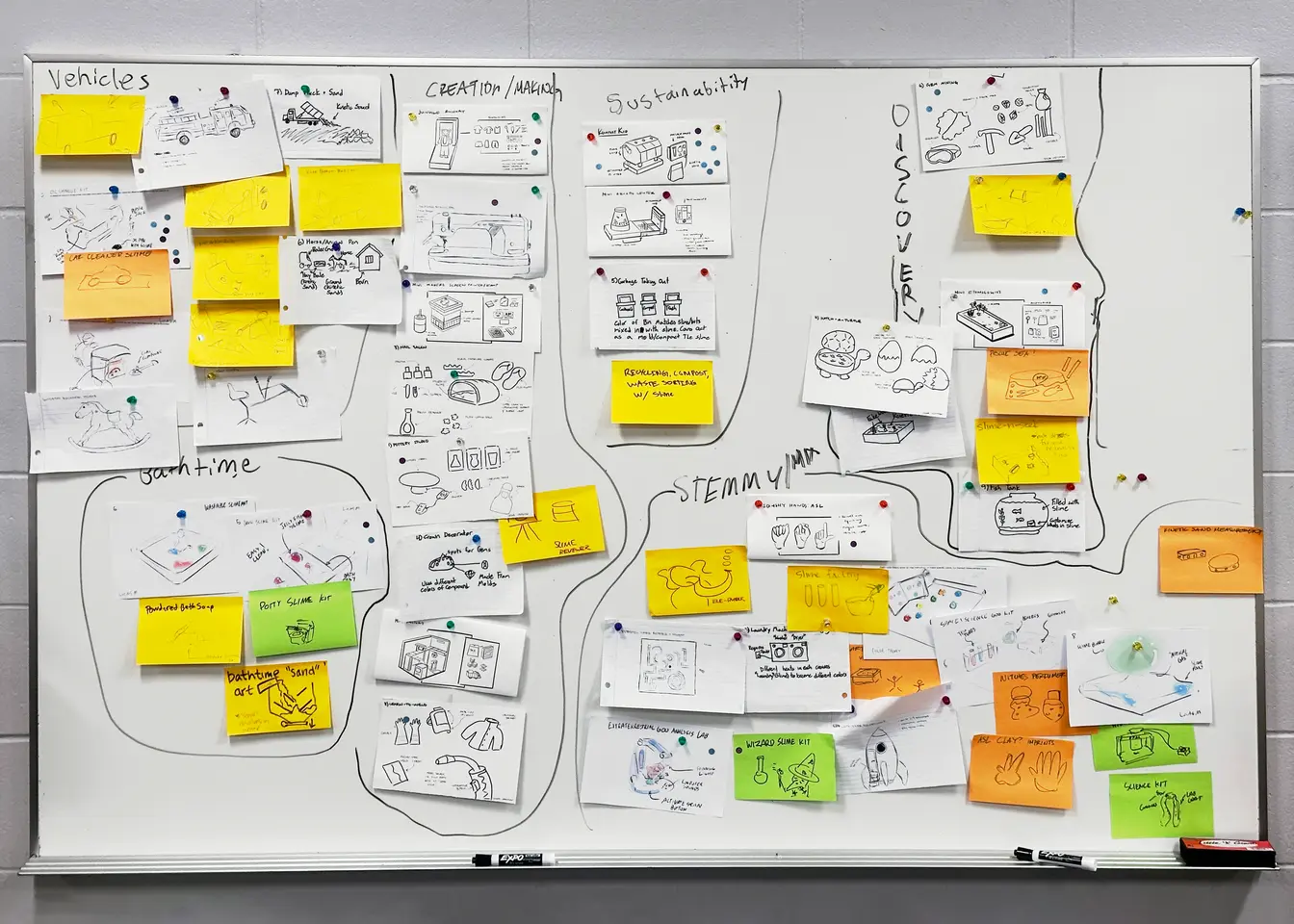
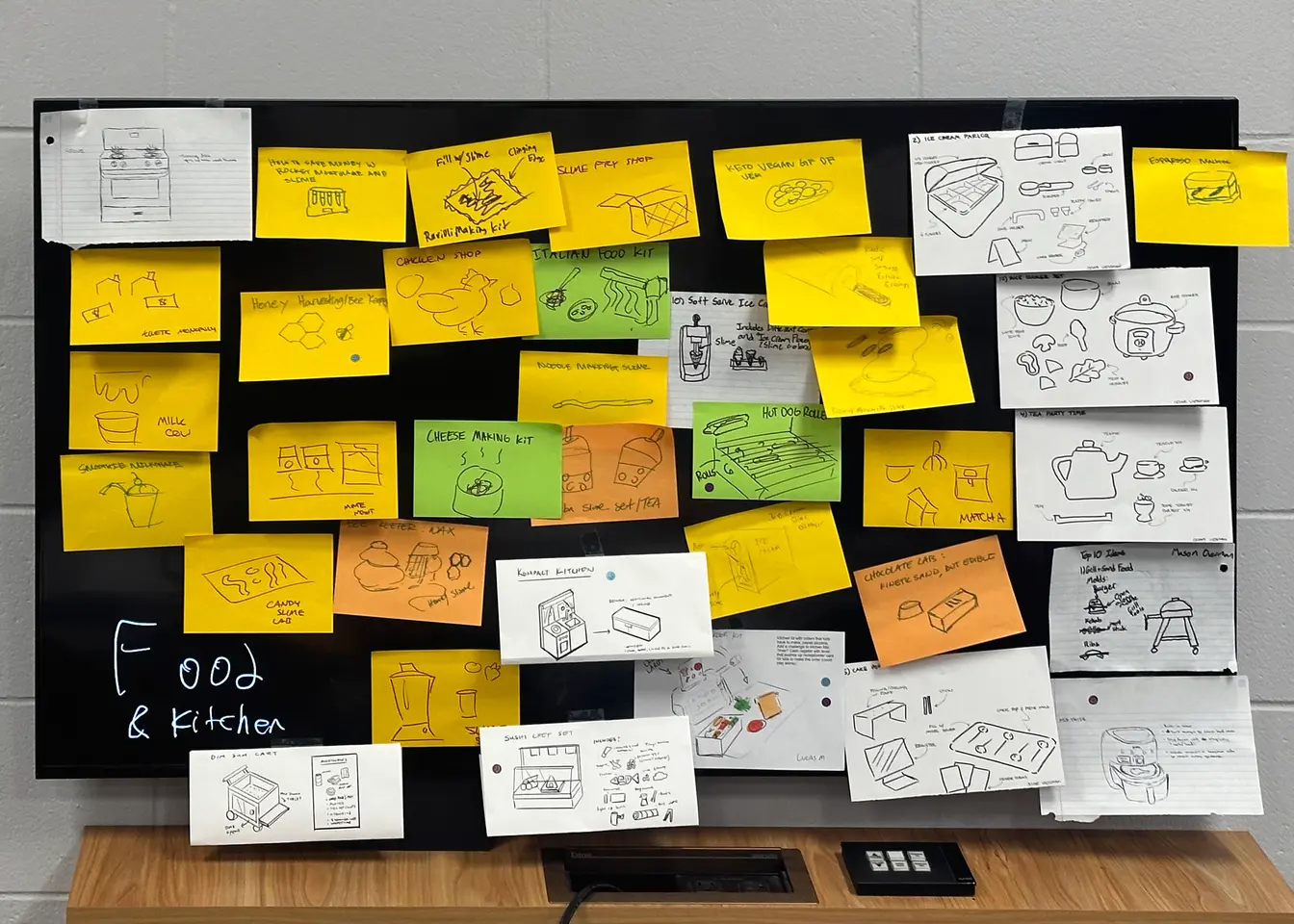
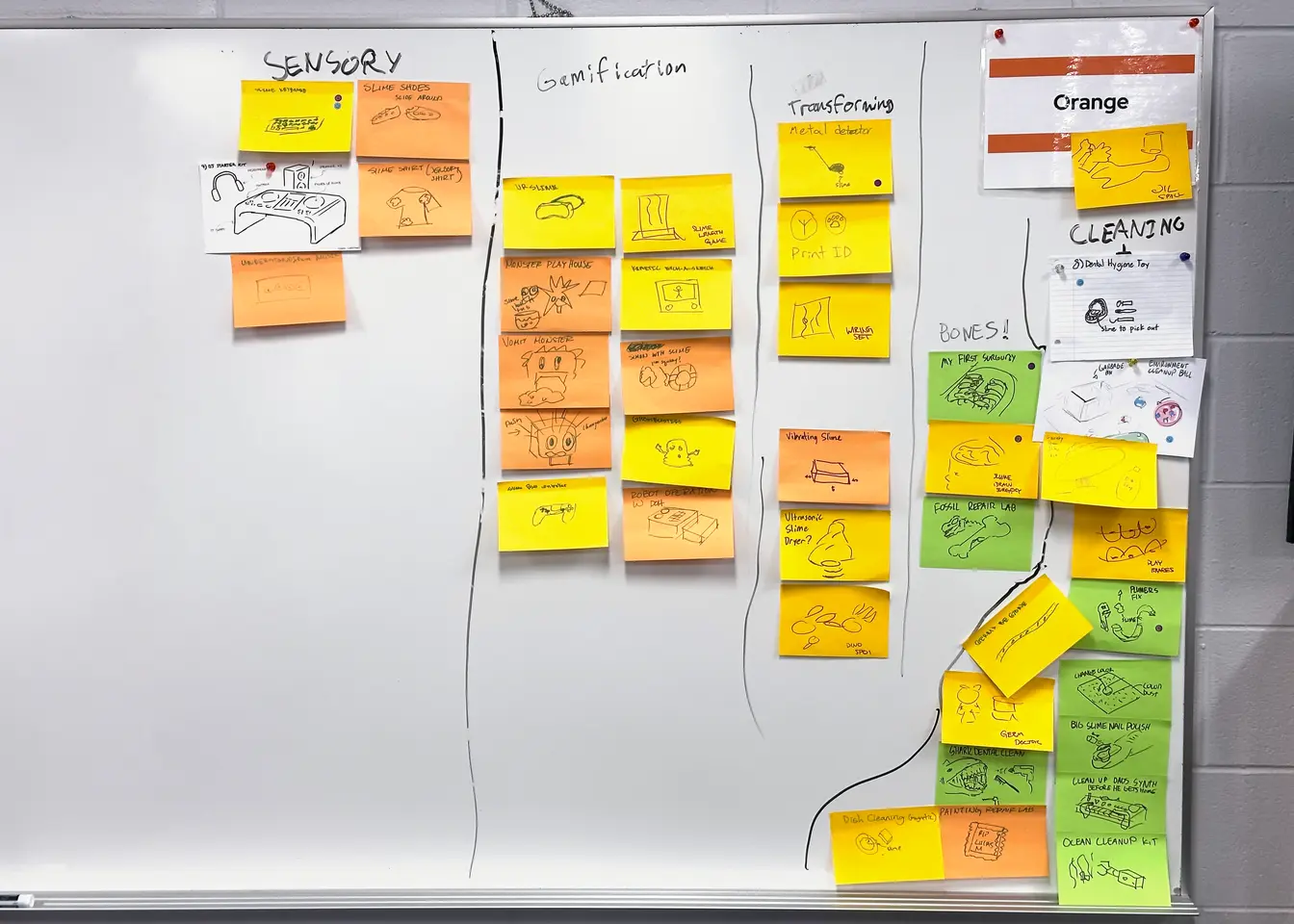
Category-Based Ideation
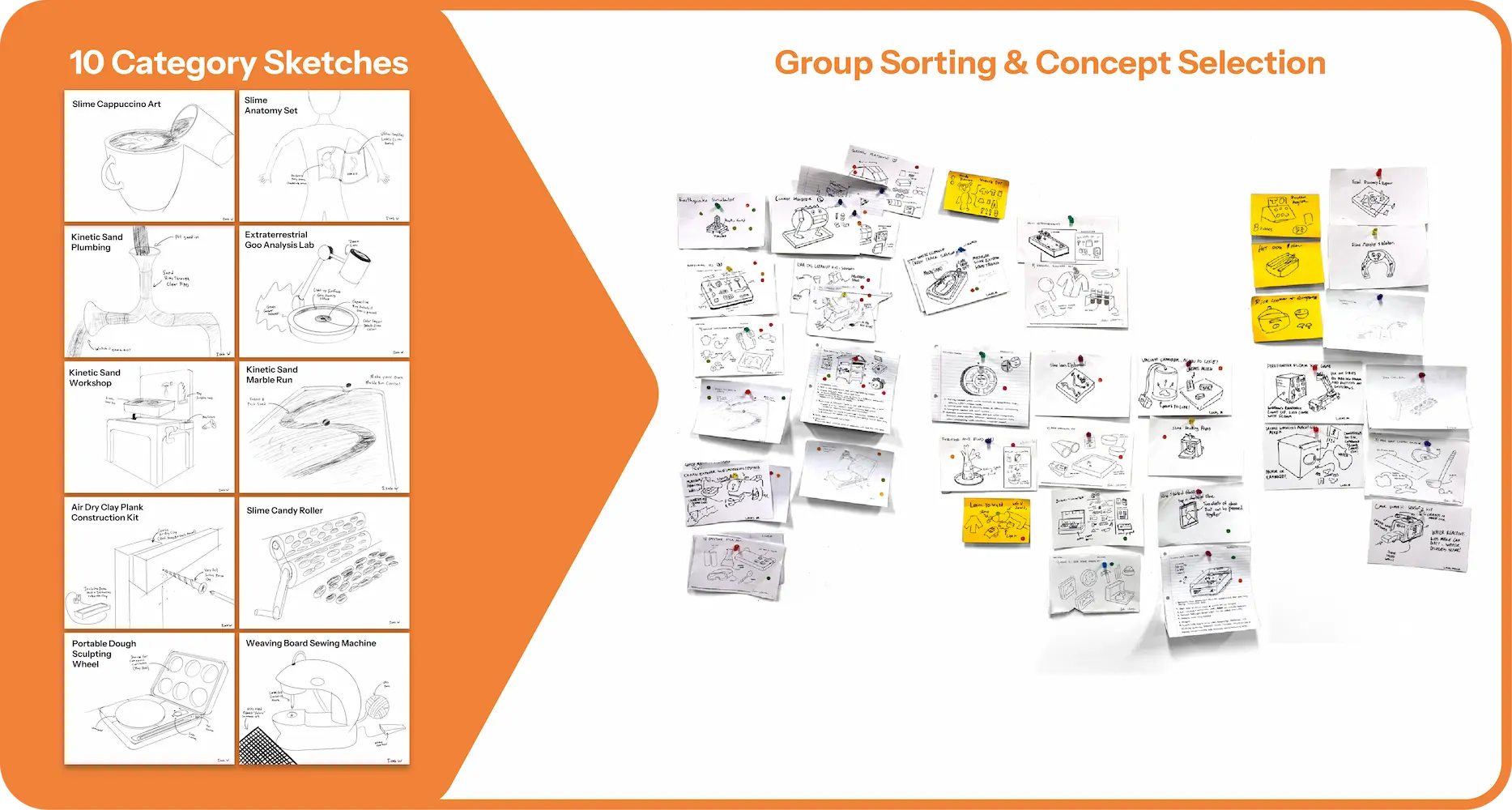
Each of us chose categories to do more research and ideation on. My categories were STEM and builder role play. We each brought new ideas and voted on which ones we would present to Hape.
Concept Presentations
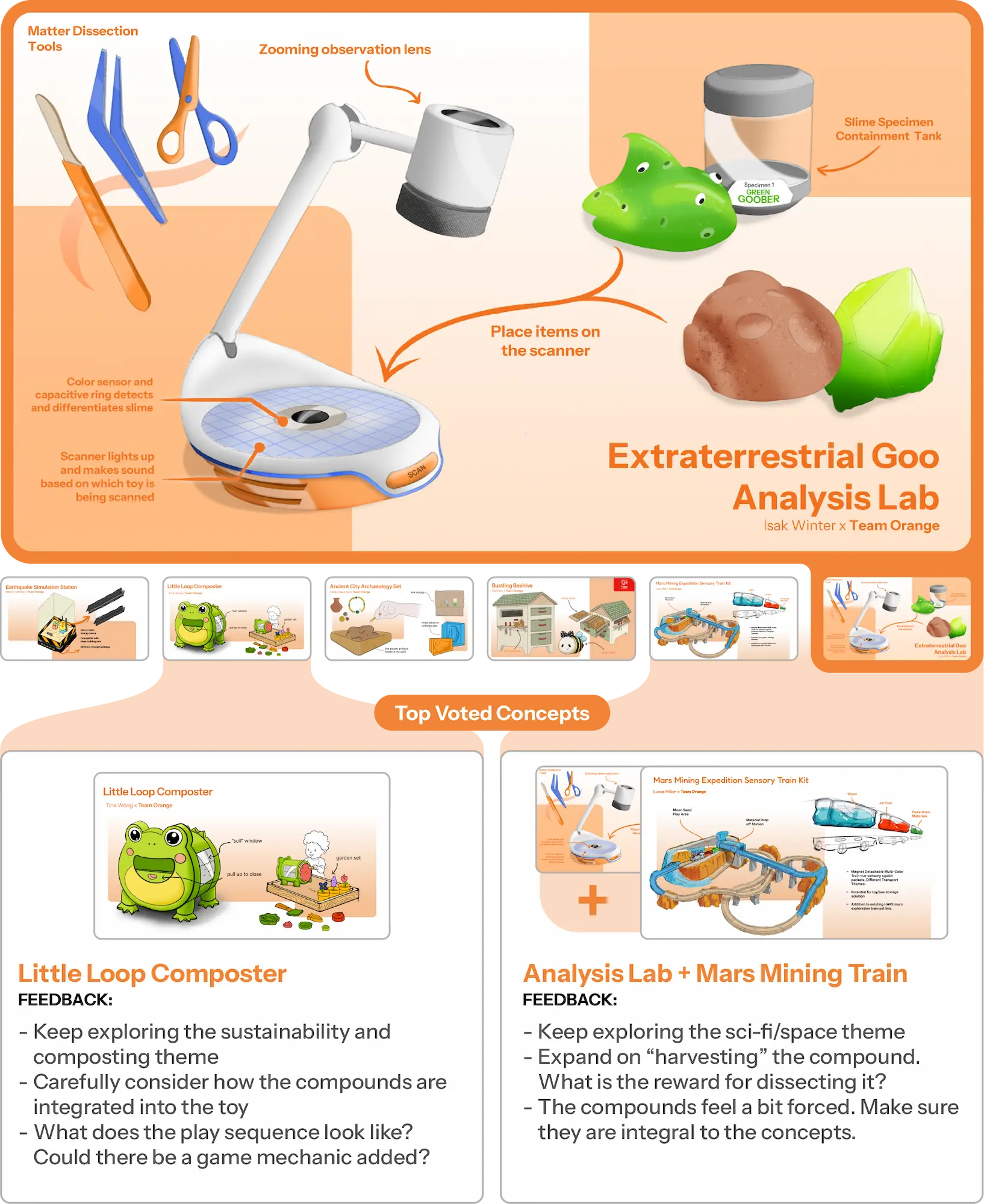
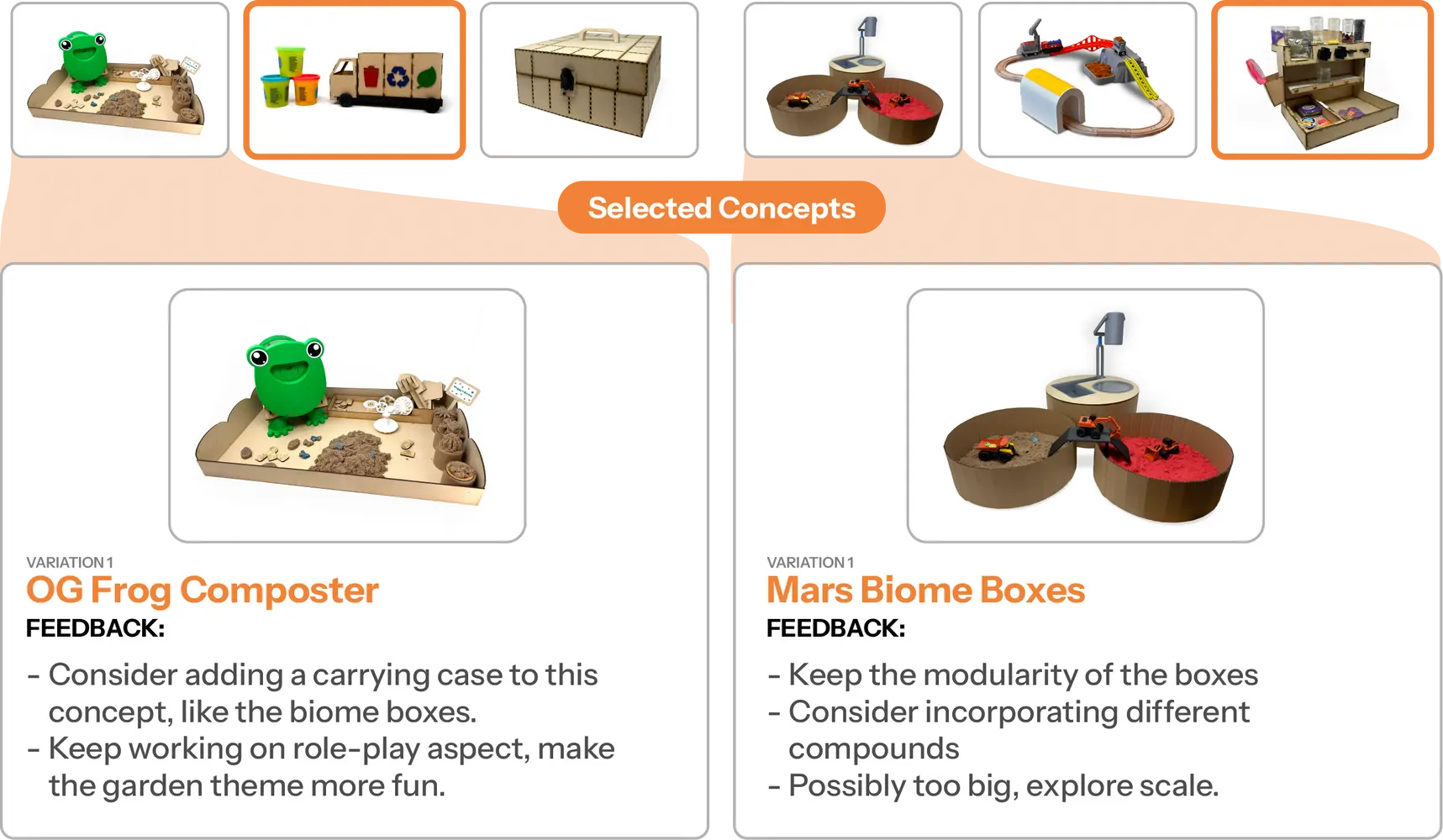
After selecting our concepts, we each rendered and presented one to Hape. They selected two concepts to explore further.
Low-Fidelity Prototyping
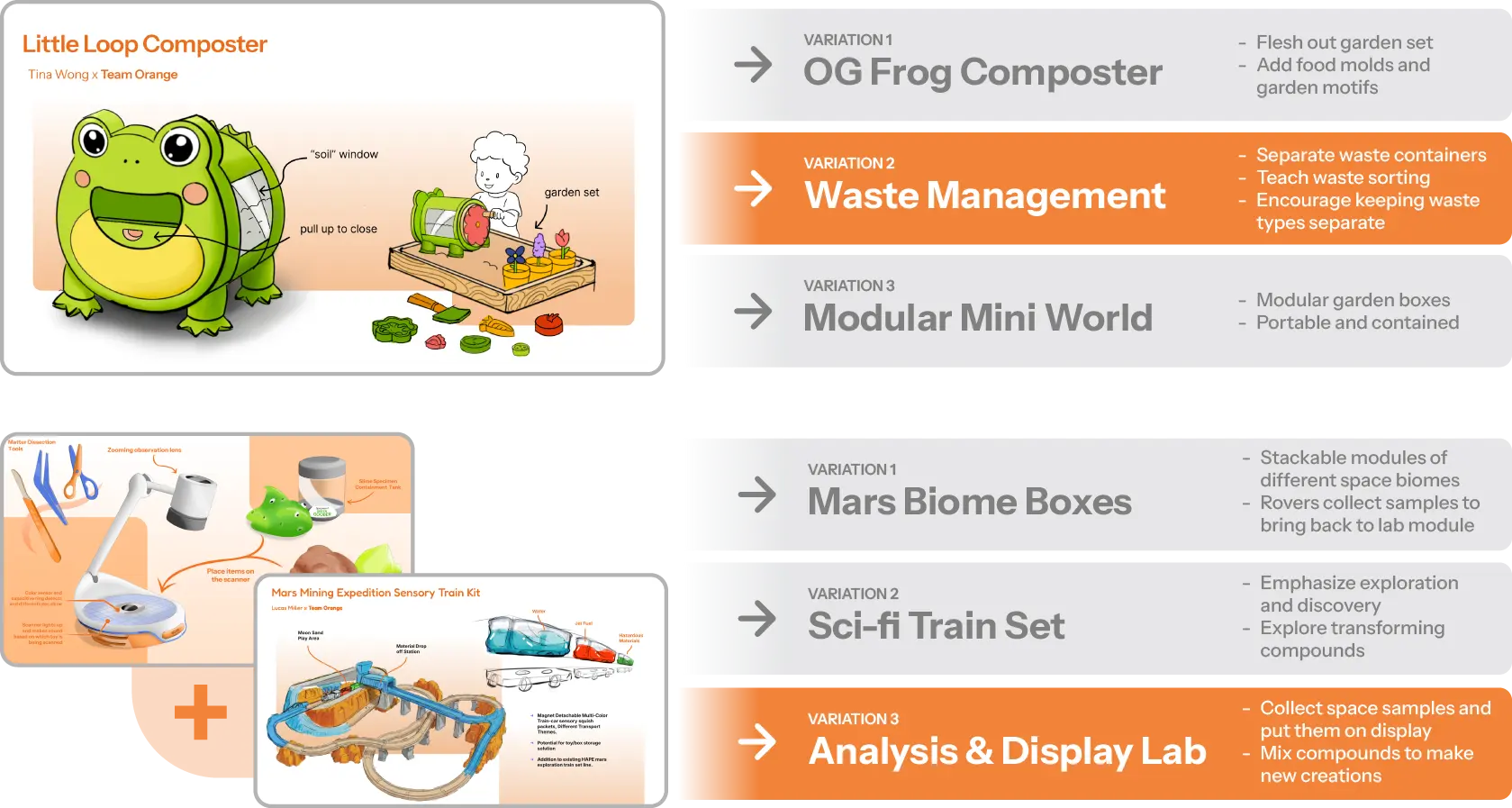
Using that feedback, we brainstormed six different ways to vary the original concepts, then prototyped each variation in pairs.
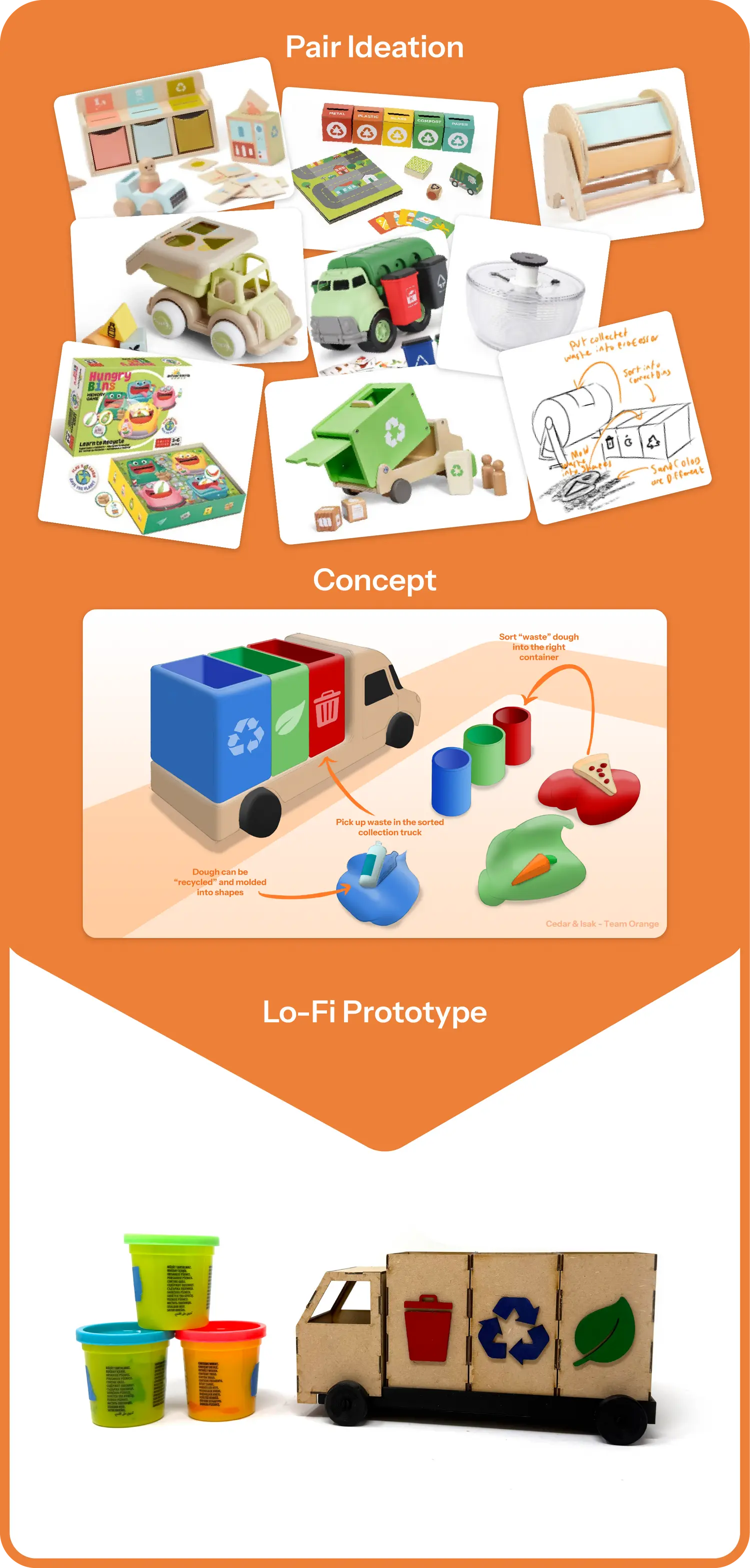
Waste Management Model
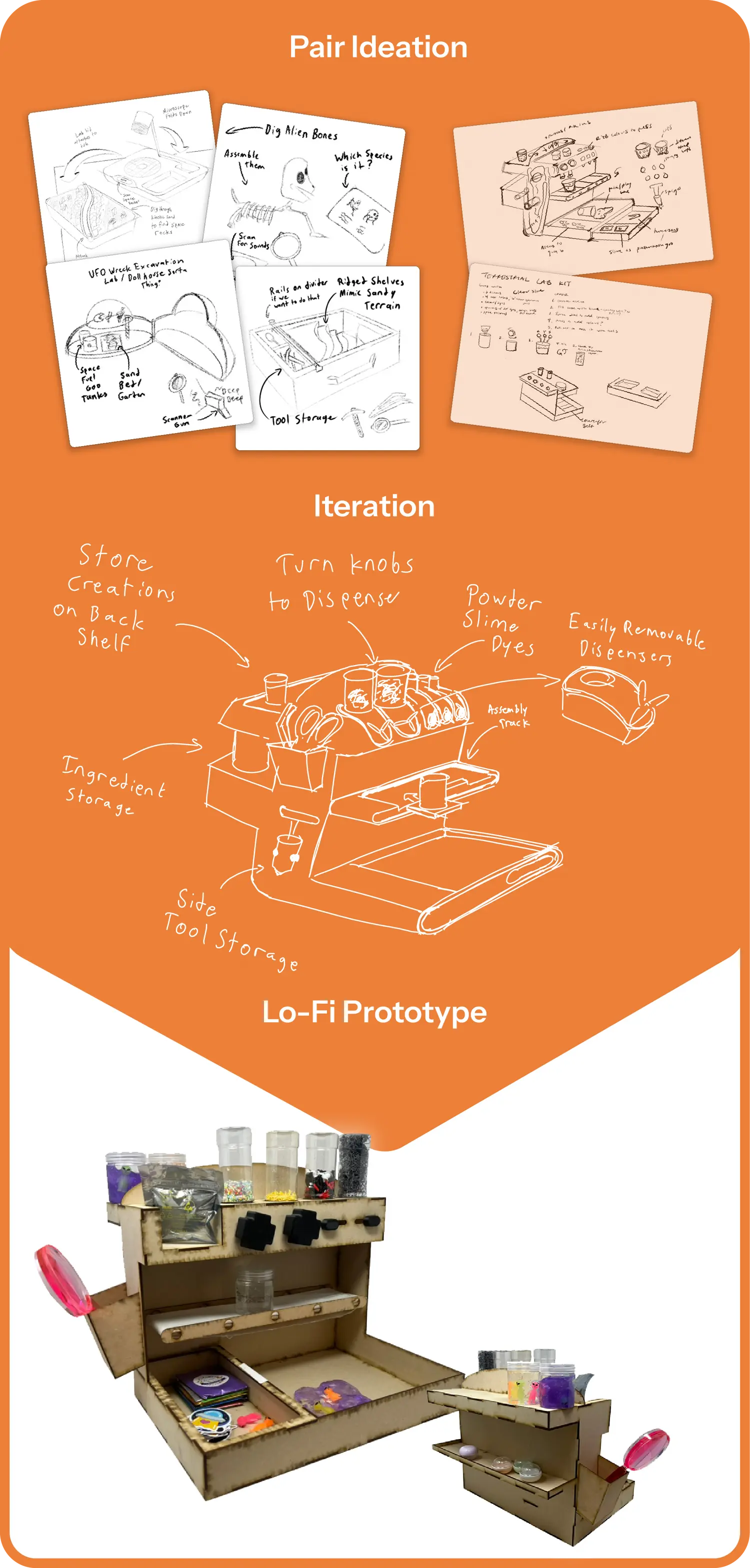
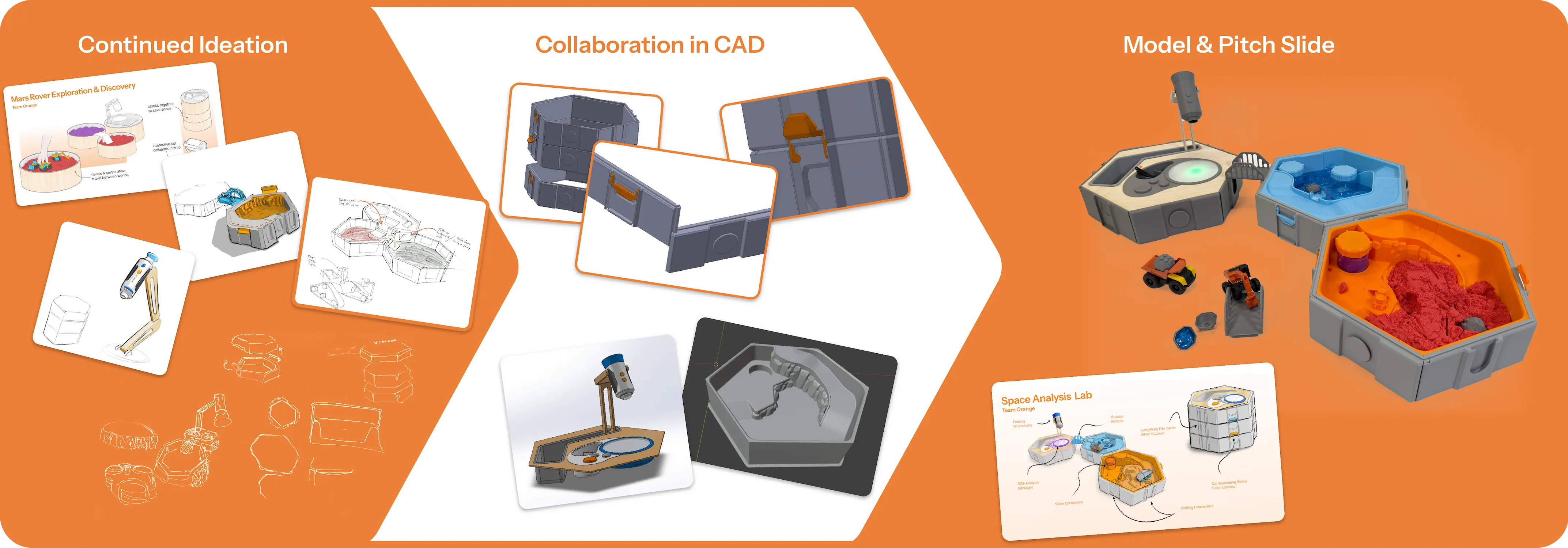
Analysis & Display Lab Model
Selected Concepts
Second Prototyping Round
Mars Biome Boxes
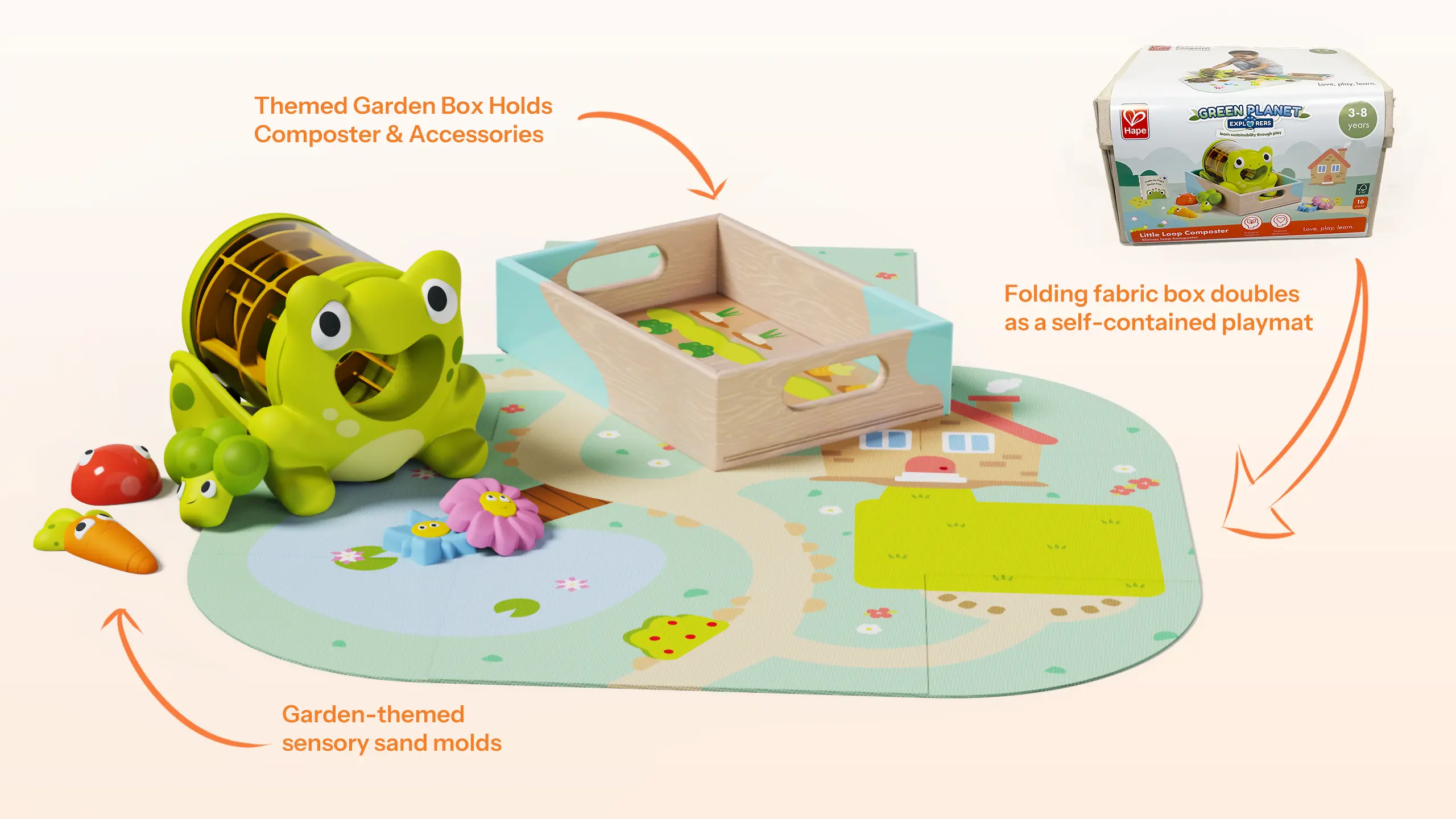
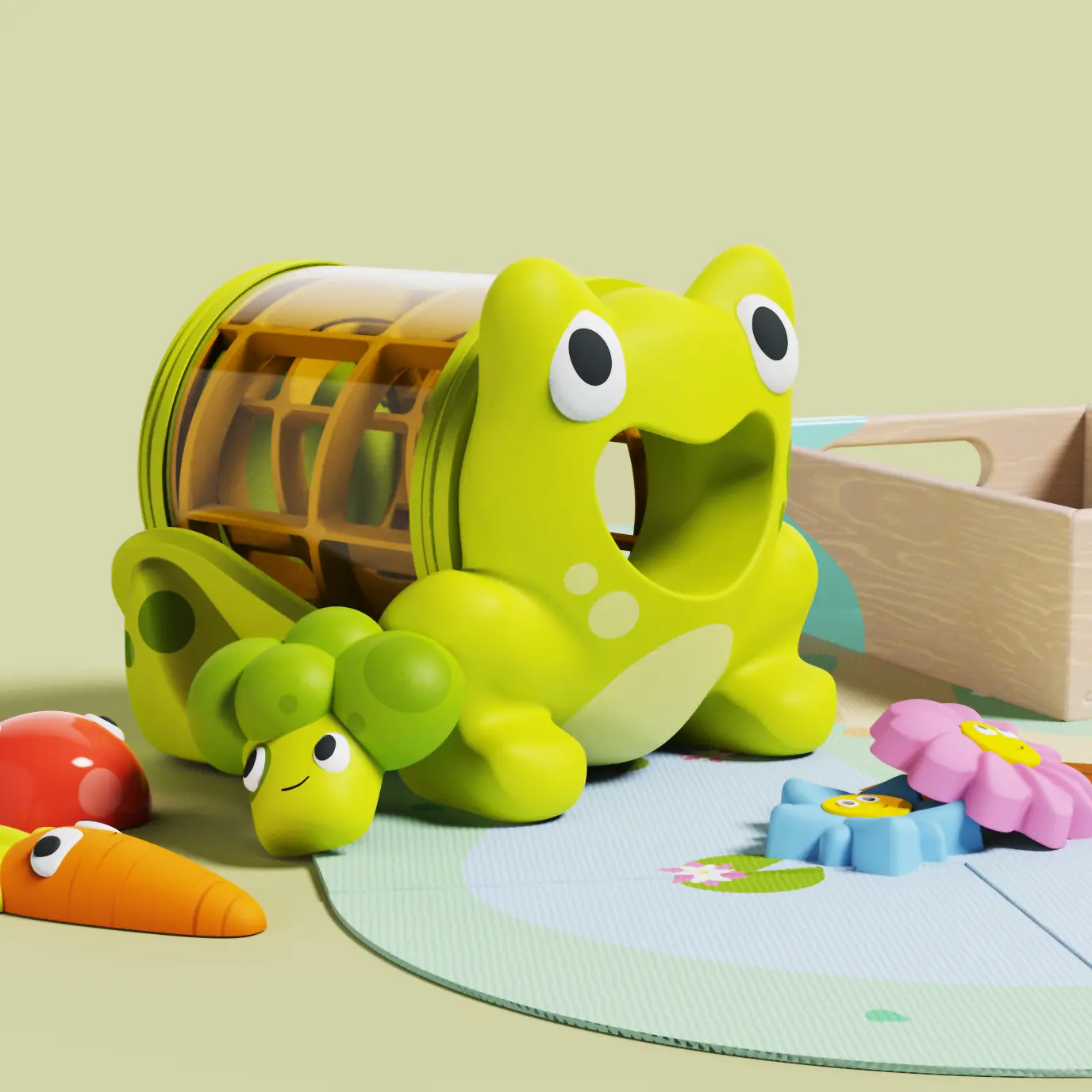
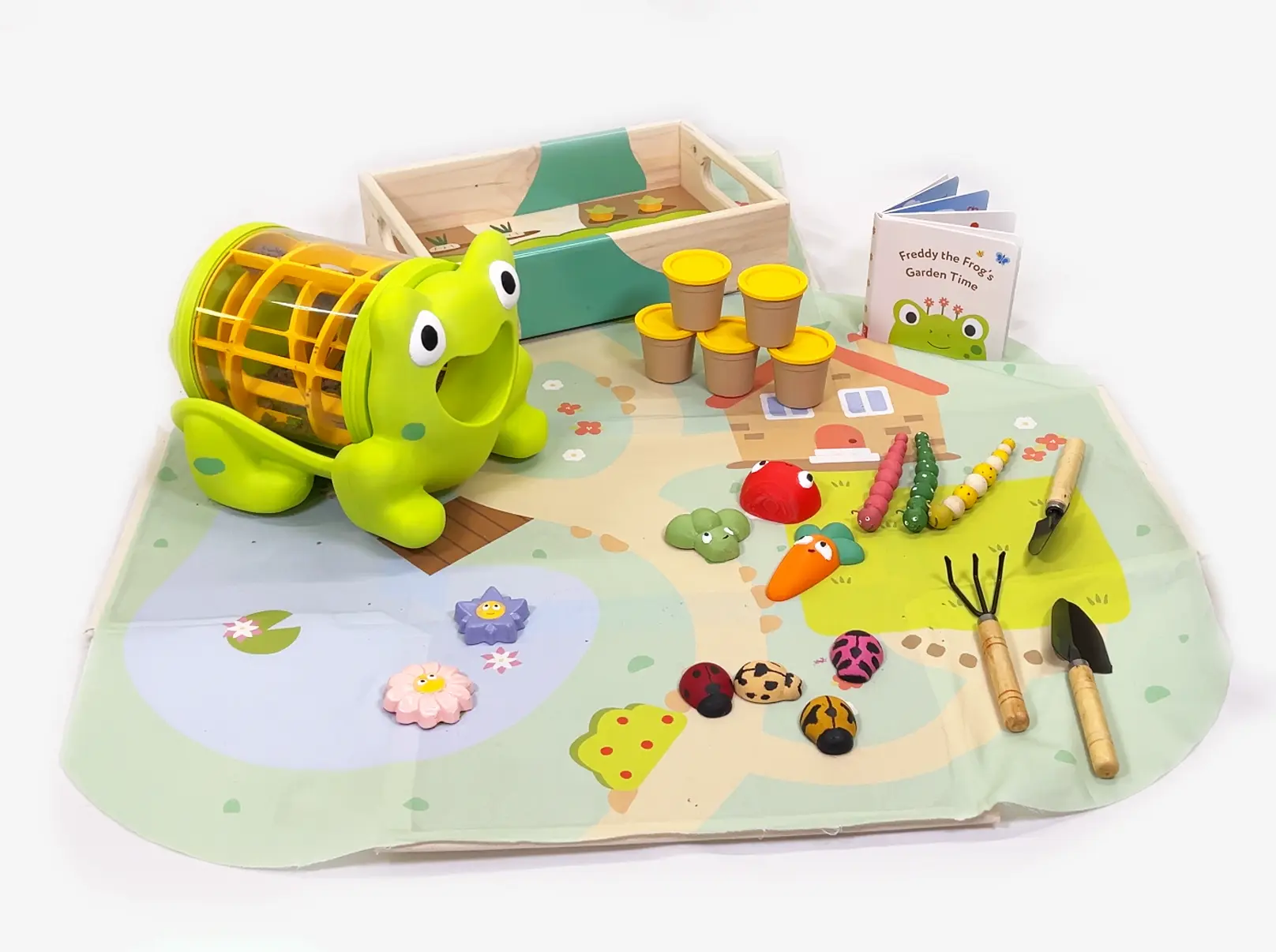
Little Loop
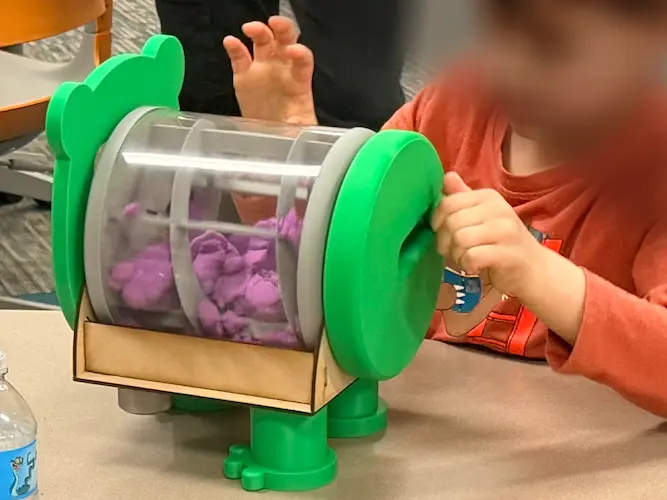
Simplifying The Turning Mechanism
Children struggled to use the crank mechanism during testing, often spinning the barrel by hand instead. Additionally, our survey respondents raised concern over independent usability. For this round, we removed the crank and lowered the body to make it easier to turn by hand.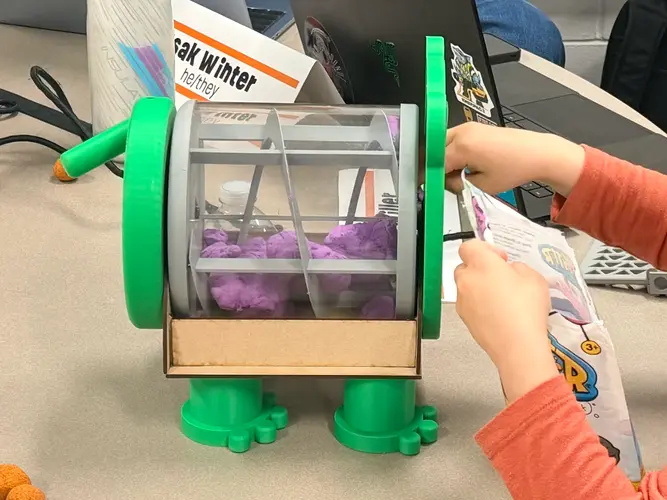
Removing Pinch Points
In the last model, fingers could pinch if the barrel was spun while feeding the composter. In this model, we added outer rollers, removed the center spindle, and moved the mouth to eliminate pinch points.A Major Design Shift
After trying other ideas, we decided to make these changes about halfway through the 2-week prototyping cycle. This gave us about a week to completely overhaul the model.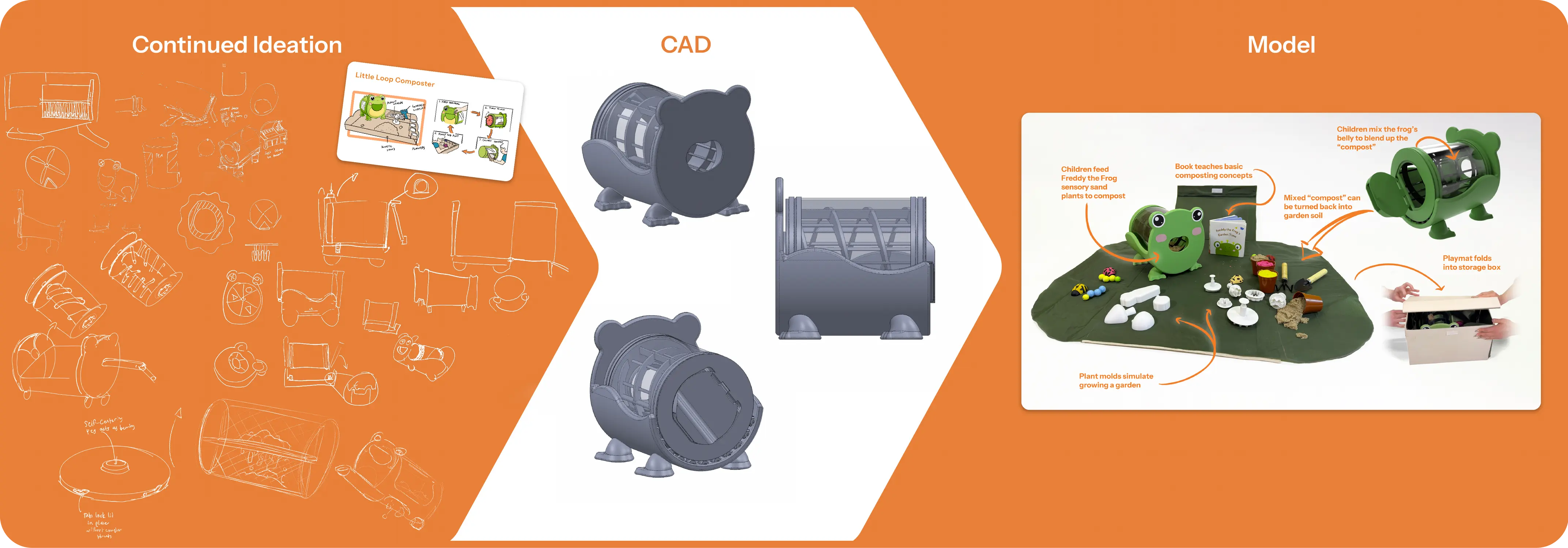
Final Round
Issues to Address
Moving into the final round, we considered feedback from our instructors and during play-testing sessions:
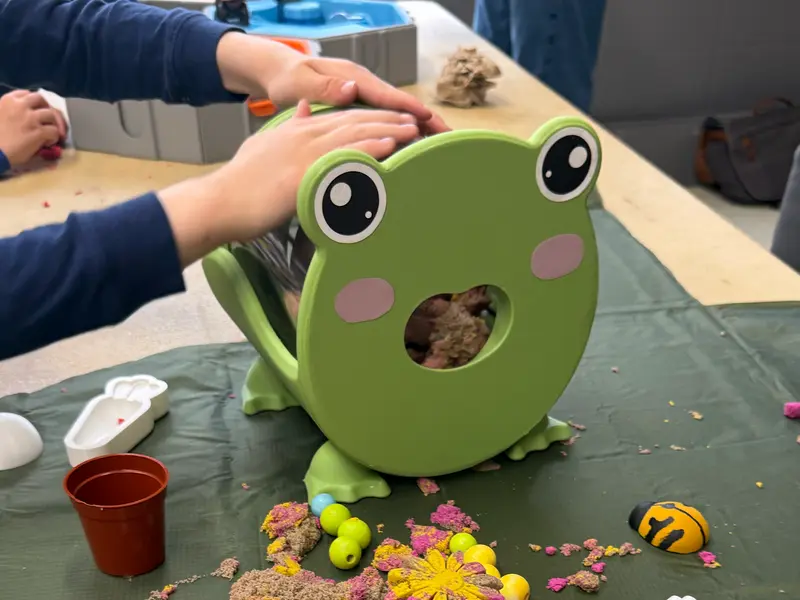
Spinning & Mixing
Sensory sand tended to clump together rather than break apart, and spinning felt a bit rough.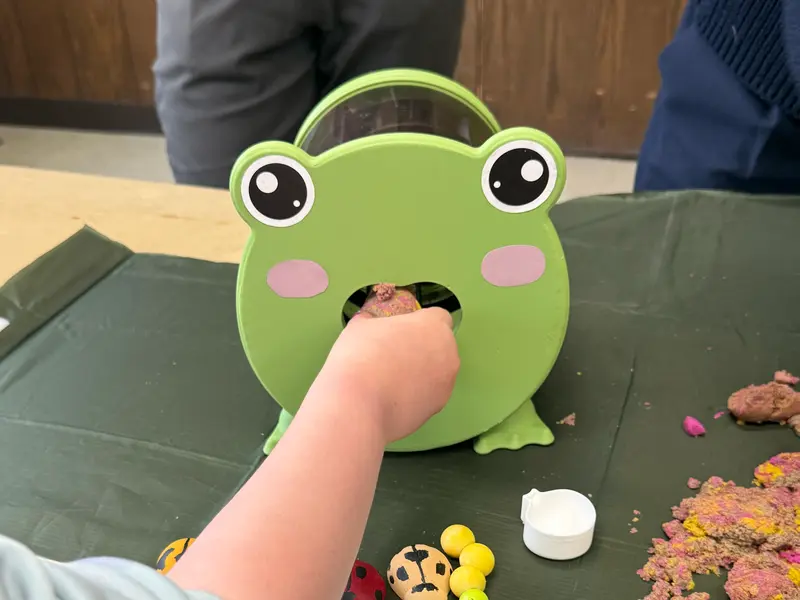
Mouth Size
The mouth opening was too small to fit most hands.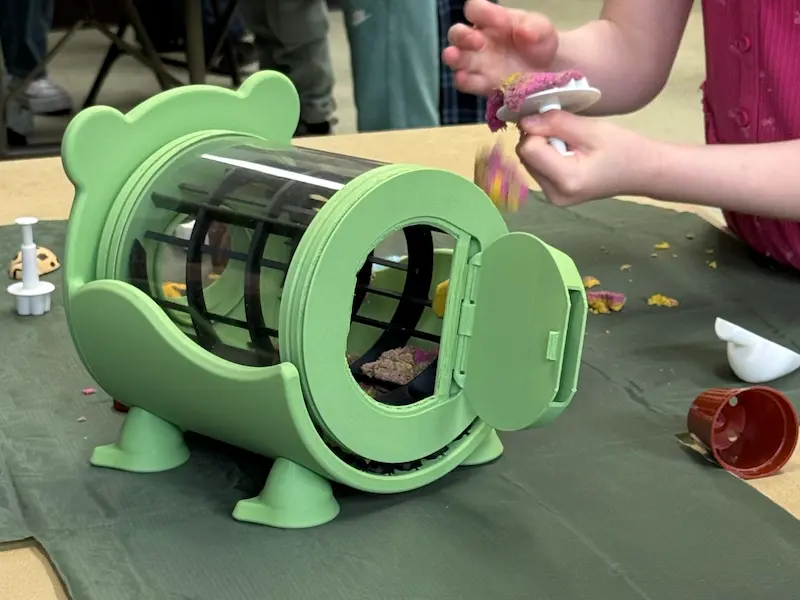
Rear Door
The door was difficult to close and felt flimsy.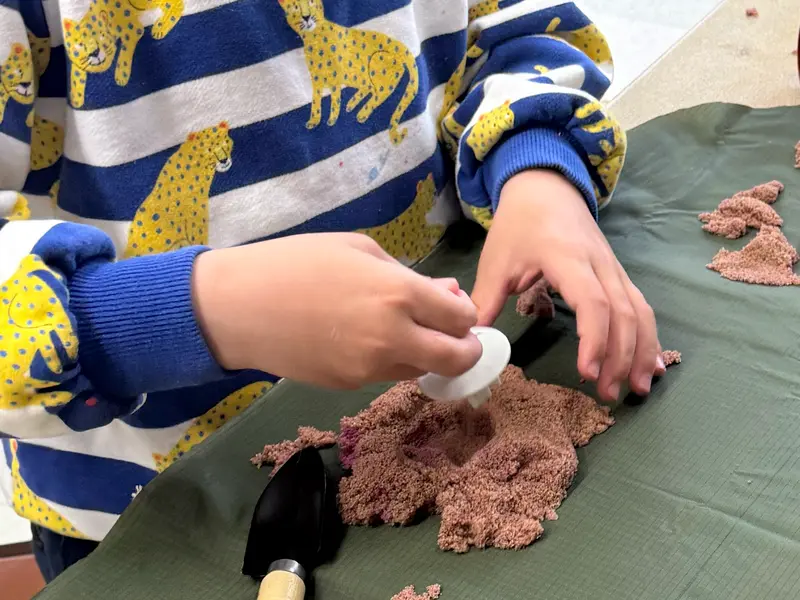
Molds
Up to this point, we used mostly off-the-shelf molds, which were difficult to use and unrefined.Process
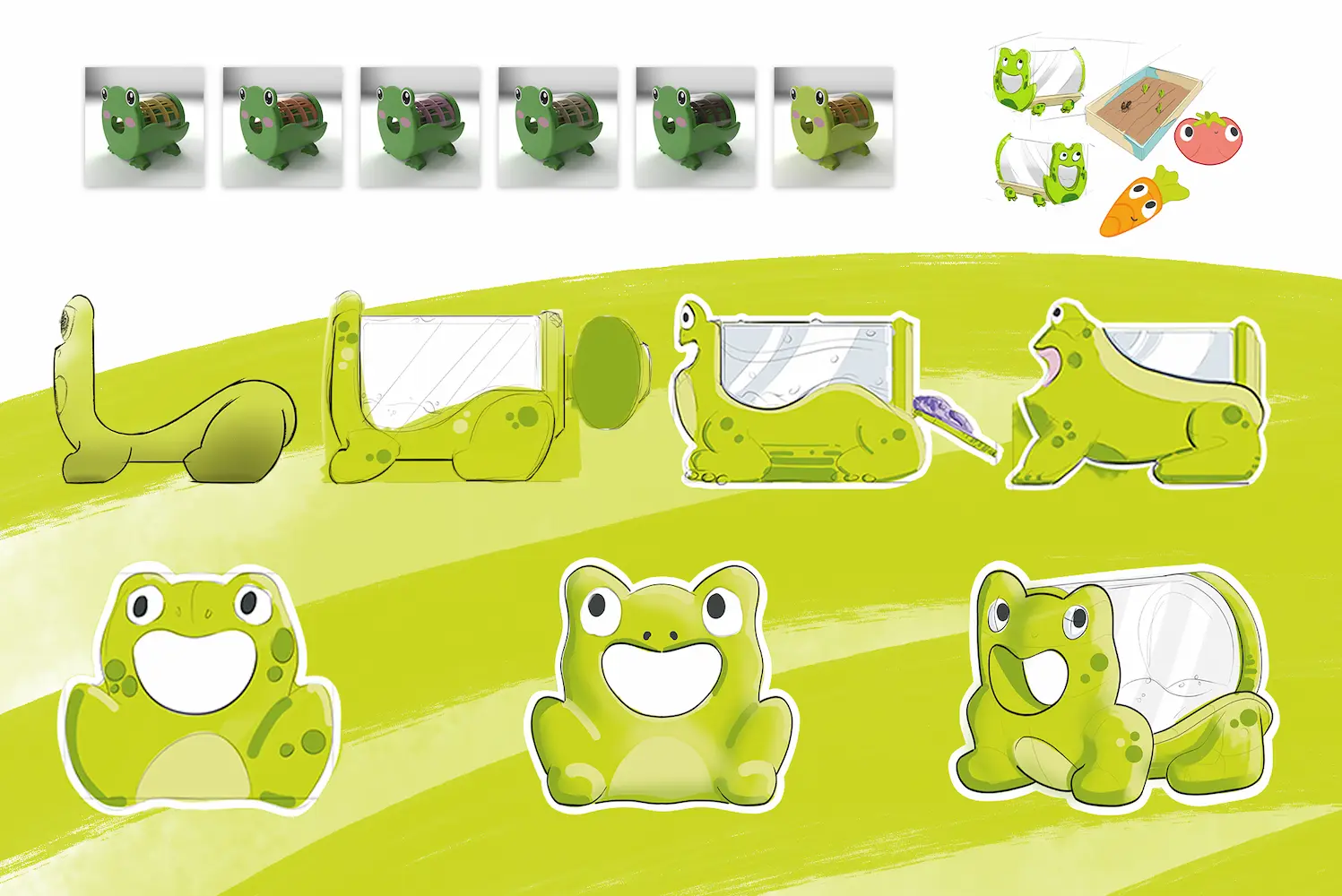
Aesthetic Iteration
With our efforts focused on a single, polished model, our team focused on filling out the form of Little Loop and refining its visual identity.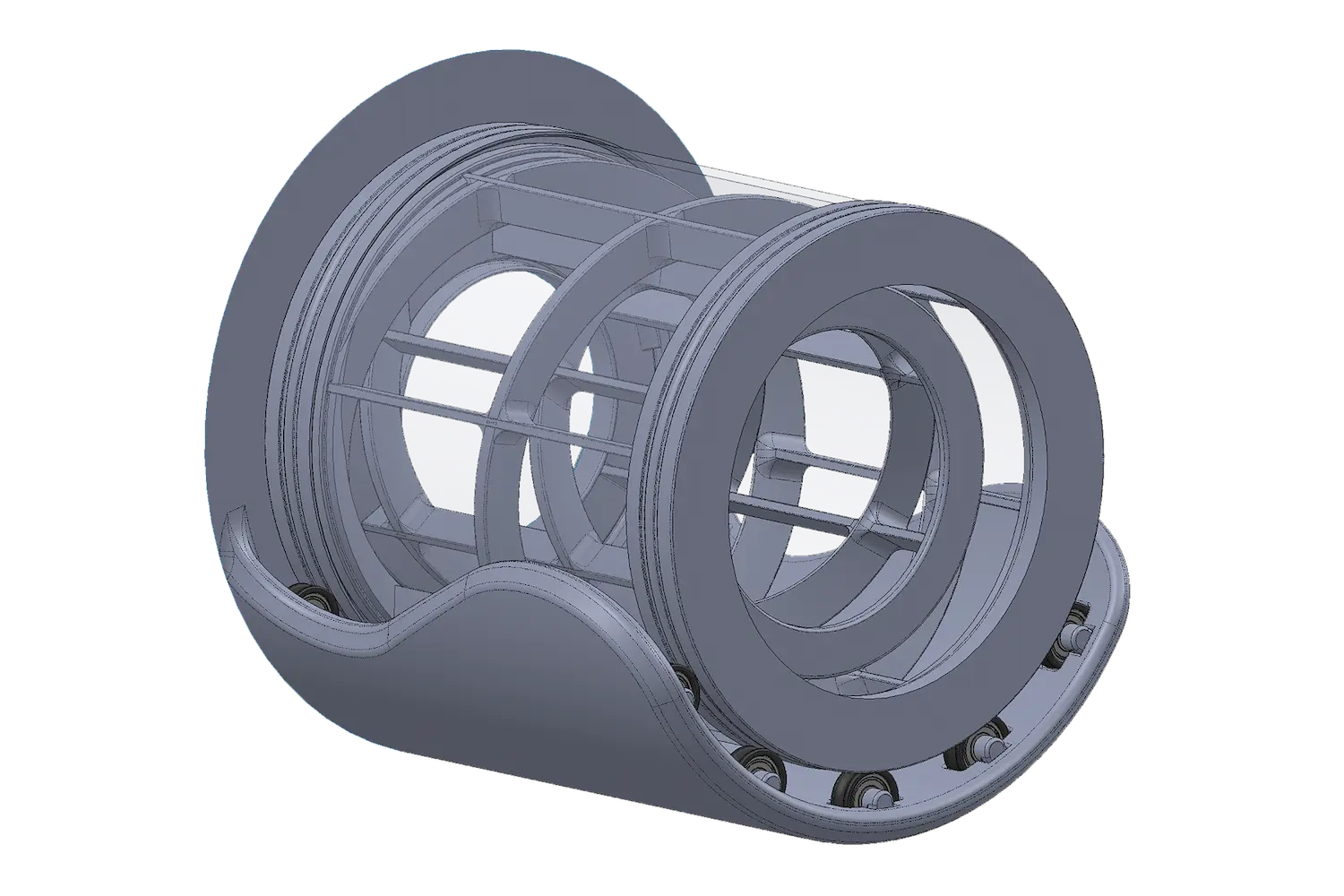
Refining the Mechanism
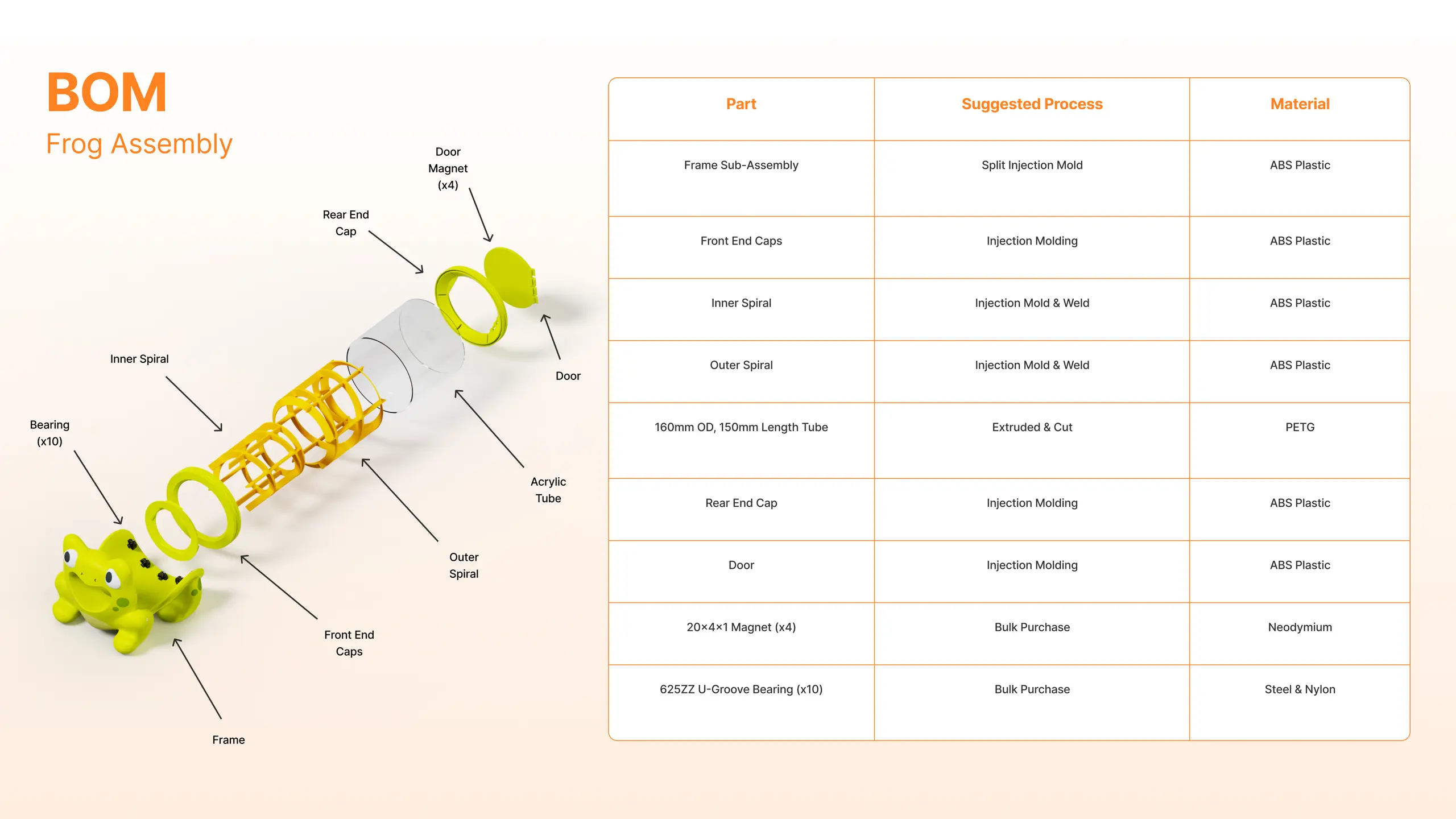
To make the mechanism more effective and smooth, I integrated bearings and built a mechanism for tearing sensory sand apart rather than tumbling it.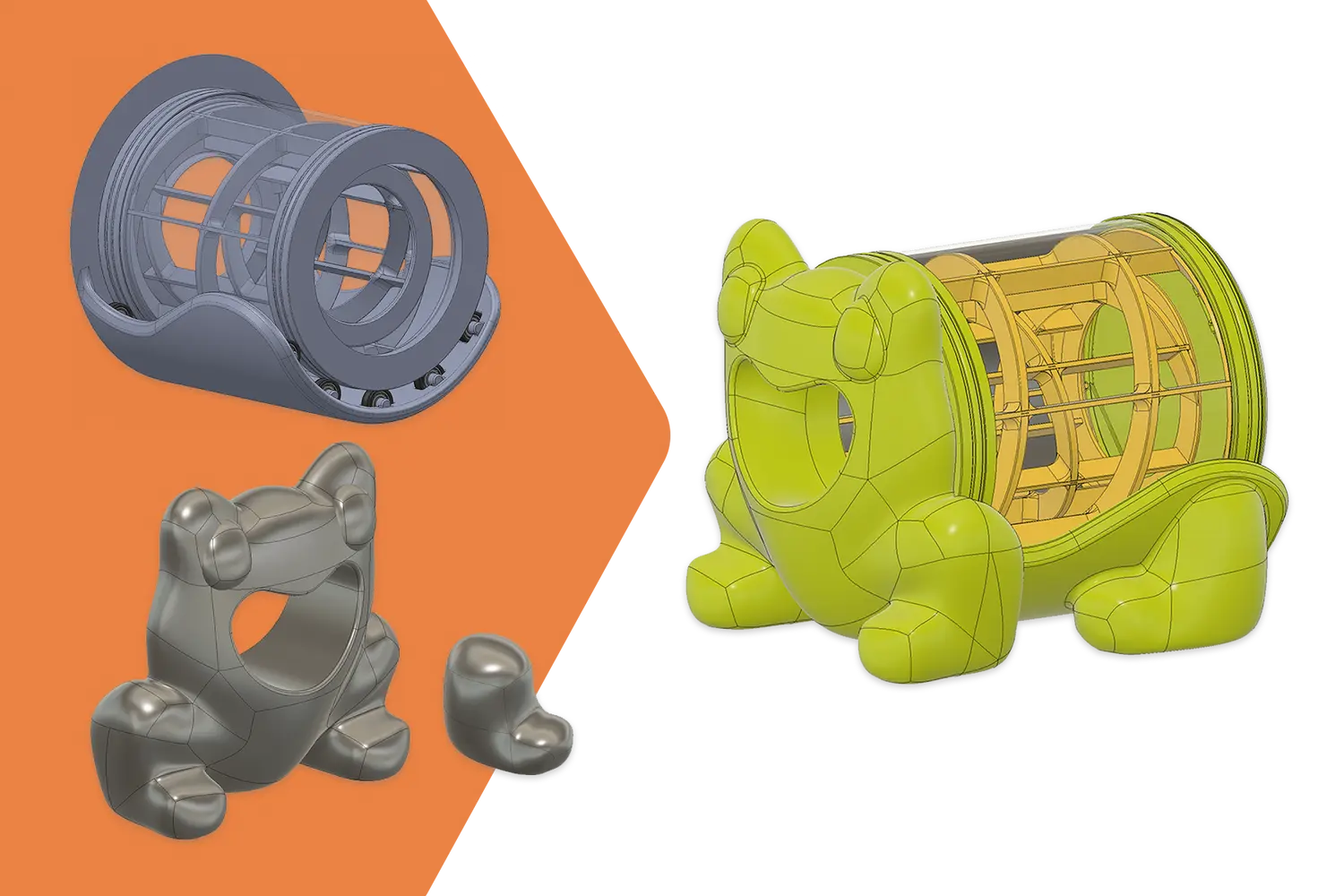
Collaborative CAD
Instead of working offline on different software, we collaborated in Fusion where we could combine SubD and parametric models into a single part.Final
Prototype
Renders & Graphics